
DDoS Protection for Hosting: What Actually Works in 2026
di yanz@123457 - 19 novembre 2026Despite being constant targets, zero successful DDoS attacks are reported by customers running production deployments. We believe that the primary attraction lies in the multi-layered coverage model (as Imperva offers protection for web applications), networks, and individual IP addresses through a single service rather than providing separate products for various asset types. Ideal for organizations that require guaranteed mitigation speed across their websites (networks), and IPs – mastering the VCL configuration involves understanding Varnish syntax, which presents a learning curve.
The leading DDoS protected hosting providers assist businesses in sustaining their online presence amid extensive cyberattacks by filtering out malicious traffic before it reaches their servers. Your website operates on the application layer (L7), which is frequently targeted. It prevents attackers from interfering with your online services. A DDoS protection service blocks fraudulent traffic from overwhelming your website (application), server, or networks. The solution uses a pricing model based on usage, and I appreciate that charges apply only for legitimate traffic.
If your business relies on online transactions, even a short period of downtime can mean lost sales and frustrated customers. By combining firewalls, traffic filtering, load balancing, CDNs, and Netwall the right hosting provider, you can keep your VPS secure and ensure your website stays online even in the face of an attack. Providers like Cloudflare offer built-in DDoS protection that detects and blocks unusual traffic patterns automatically. If an attack compromises your system — having recent, clean backups means you can quickly restore your VPS without extended downtime or data loss. Outdated software can leave vulnerabilities open for attackers to exploit. Application layer attacks are more sophisticated and target the software running on your VPS rather than just the network.
AWS Shield Standard is included at no extra cost for AWS resources, while AWS Shield Advanced typically starts around three thousand dollars a month. Small and mid-sized businesses are frequent targets in practice. A comprehensive DDoS protection strategy needs to address all three, since attackers frequently combine them into multi-vector attacks.
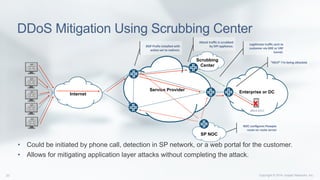
- DDoS attack mitigation refers to the process of protecting a network or server from a DDoS attack.
- If simplicity in cloud-based deployment is your main concern (the complexity could overshadow the advantages; however), Arbor Cloud offers benefits for organizations that prioritize hybrid flexibility and detailed traffic analysis.
- Zap-Hosting specializes exclusively in gaming server hosting with DDoS protection specifically engineered for game server workloads.

Selecting a Mitigation Provider: A Guide
That means stopping threats at multiple points in the network stack, before they affect your applications or users. When uptime is money and downtime is a disaster — you can’t afford to let a DDoS attack bring your server to its knees. Individual servers and websites can be protected via proxy / DNS change, no network reconfiguration required Prolonged downtime triggers penalties, refunds, and contract terminations Remember that not all DDoS attacks are the same, and attackers look to strike your defenses where you least expect it.
This article has explored how you and a quality web hosting company can work together to mitigate DDoS attacks — ensuring your site remains secure and operational. However, shortly after, they noticed odd bandwidth statistics in their MyKinsta analytics and reached out to us, worried about the unusual traffic. Recently, a financial company decided to move to Kinsta as their new hosting provider. Kinsta provides a fully managed WAF with regularly updated custom rulesets and configurations, ensuring continuous protection against the latest threats.
Need help choosing the best option?
This provides DDoS protection , layers 3, 4, and 7, to block unwanted TCP/UDP connections originating from specific IP addresses or networks at the edge of our network. As attacks became more frequent and sophisticated, we integrated Cloudflare into our hosting infrastructure to ensure our clients’ sites were safe and sound. Over time, we automated many of these processes, running scripts to set and unset iptables rules and kernel parameters as needed. Additionally, we take daily automatic backups of your WordPress site to ensure your data is safe. Your hosting provider can play a key role in protecting your site from DDoS attacks. Tools like Nessus can help you scan your network for potential weaknesses and ensure your defenses are up-to-date.
Implementation with CloudFront or public ALBs takes minutes — and the service protects applications without ongoing tuning. We think the zero-cost Standard tier is the standout for cloud DDoS mitigation; every AWS customer gets baseline protection without configuration or additional spend. If you want deep self-service control over mitigation algorithms (the managed model may not suit your workflow; but for organizations that want enterprise-grade cloud DDoS defense without building in-house expertise), Prolexic delivers. – Layer 7 behavioral detection blocks Web DDoS Tsunami attacks and advanced HTTP/S floods We evaluated eight cloud DDoS mitigation platforms across scrubbing capacity, detection speed, cloud provider integration, customization flexibility, cost structure, and support responsiveness during active attacks. The wrong choice means expensive bandwidth charges during attacks, service outages that cascade across your platform, or overbuilt infrastructure you’re paying for even during quiet periods.

Downtime and revenue loss
Layer 3 , Network Layer, attacks flood routers and network infrastructure with traffic packets, typically ICMP floods or spoofed IP packets, to consume available bandwidth. It automatically blocks DDoS attacks without you notifying the company about an attack, which minimizes downtime. The term ‘DDoS mitigation’ refers to the process of successfully protecting a target from a distributed denial of service (DDoS) attack.
Web Application Firewall – With top-notch analysis of web traffic directed at your applications, Imperva empowers you to thwart attacks and maintain business continuity. Attack traffic is blocked at the edge by the solution — guaranteeing uptime and ensuring business continuity without impacting performance. Attackers launch numerous requests during an application layer attack, making them seem like they originate from genuine users towards web applications or other software. During the detection phase, the system distinguishes between legitimate traffic and attack traffic. Protecting a server from distributed denial-of-service (DDoS) attacks is known as DDoS mitigation. Attackers usually generate high volumes of packets or requests that ultimately overwhelm the target system.
This means that only filtered traffic reaches your hosts – protecting your investment in hardware — software, and network infrastructure, while ensuring business continuity. Imperva constantly monitors the behavior of your site visitors — blocks known bad bots, and challenges unrecognized visitors with JavaScript tests, cookie challenges, or even CAPTCHAs. In a typical Anti-DDoS hosting scenario, website owners pay on an ongoing basis for bandwidth used to absorb a potential attack – even if no such attack is ongoing. Anti-DDoS hardware is a physical layer of protection between potential attackers and your network. But even optimum firewall deployment and configuration cannot eliminate DDoS damage, especially in application layer attack scenarios.
Reasons to Opt for Our Services
DDoS-protected hosting for small businesses ensures your site stays online and trustworthy. Unlike web hosting DDoS protection (optimized for HTTP traffic), Zap-Hosting’s protection analyzes game-specific protocols, recognizing legitimate player packets while filtering malicious traffic targeting game server infrastructure. Cloudways is a managed cloud hosting platform specifically optimized for WordPress and PHP applications. VPS DDoS protection typically handles volumetric attacks and some application-layer threats and is suitable for growing businesses that conduct sensitive operations. DDoS-protected hosting is a specialized service designed to counter distributed denial-of-service attacks by implementing advanced security features for real-time traffic analysis and filtering. For businesses that operate sensitive processes (websites with high traffic or business-facing applications), this layer of protection is necessary.

